

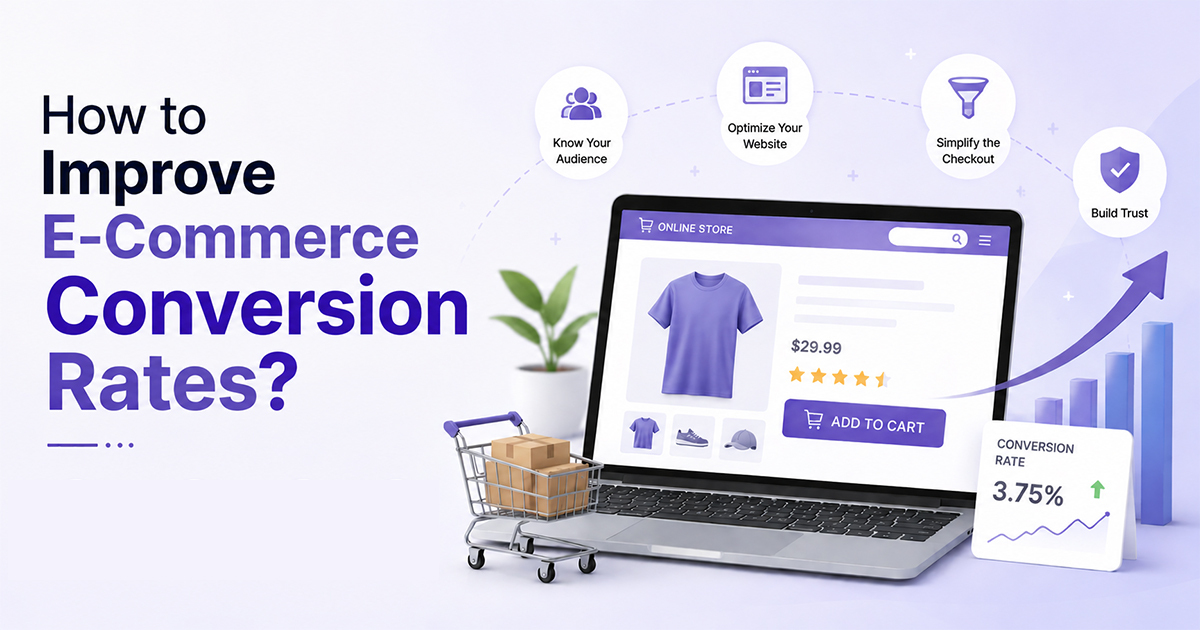
How to Improve E-Commerce Conversion Rates?
As you know, it is good if people are visiting to your online store, but it’s not worth it if they do not make a purchase. This is why learning how to improve conversion rate is very important. A higher e-commerce conversion rate means more visitors become customers. That directly means your online sales are increasing. As we can see, many stores have potential to sell, but due to some small issues, it can slow down your sales. Examples of these issues include slow websites, confusing checkout pages, and poor product descriptions. But you can make these things work by doing a few simple changes.
What Is an E-Commerce Conversion Rate?
An e-commerce conversion rate is the percentage of people who visit your online store and make a purchase. It indicates the number of visitors who become paying customers. A higher e-commerce conversion rate means your website is successfully turning visitors into customers. By focusing on how to improve conversion rate, you can increase online sales, improve shopping experience and grow your business without attracting more visitors.
Why are Your Visitors Not Converting?
- Slow Website Speed
- Poor Product Pages
- Complicated Checkout Process
Slow Website Speed:-
A slow website is one of the biggest reasons for low e-commerce conversion rates. Because if your pages take too much time to load, the visitors may leave the website without exploring or purchasing. That causes higher bounce rates and lost sales. By improving website speed, you can enhance the user experience, boost conversion rates, and increase online sales.
Poor Product Pages:-
Poor product pages can make visitors loose interest and leave without buying. Low-quality images, incomplete product descriptions, and missing details reduce customer trust and hurt e-commerce conversion rates. To improve e-commerce conversion rates, create informative and SEO-friendly product pages. It will increase online sales.
Complicated Checkout Process:-
A complicated checkout process can be the reason which discourages customers from completing their purchase. Having too many steps, mandatory account creation or limited payment options can be reasons for cart abandonment. And lower e-commerce conversion rates. A simple, fast and secure checkout process helps improve e-commerce conversion rates, boost conversion rates and increase online sales.
Steps to Improve E-Commerce Conversion Rates?
- Improve Website Speed.
- Optimise for Mobile Users.
- Create High-Quality Product Images.
- Run Discount and Limited Time Offers.
Improve Website Speed:-
A fast website speed plays a very important role in improving e-commerce conversion rates and keeping visitors engaged. Because slow website speed increases bounce rates. This is why businesses need to optimise the page load time to enhance user experience, improve SEO rankings, and build customer trust. A faster website helps boost conversion rates, increase online sales and maximise your e-commerce success.
Optimise for Mobile Users:-
This is very important to make your website mobile-friendly because most users browse things on phones. That’s why mobile optimisation is very important for e-commerce conversion rates. A mobile-friendly design with fast loading, easy navigation, and responsive layouts improves the shopping experience. So, optimising your store for mobile devices helps improve e-commerce conversion rates and increase online sales.
Create High-Quality Product Images:-
High-quality product images help customers clearly see your products and make confident buying decisions. Professional product photography builds customer trust, enhances the shopping experience and helps improve e-commerce conversion rates, boosts conversion rates and increases online sales.
Run discounts and limited-time offers:-
If you offer discounts and limited-time offers to customers, then it will increase the chances of more sales before the deal expires. Because these promotional strategies help improve e-commerce conversion rates, boost conversion rates, increase online sales and encourage repeat purchases.
Conclusion
Improving e-commerce conversion rates is all about creating a better shopping experience for your customers. By increasing website speed, optimising your store for mobile users, using high-quality product images, simplifying the checkout process, and running attractive discounts and limited-time offers, you can turn more visitors into loyal customers. Continuously testing and improving your online store will help boost conversion rates, increase online sales and give long-time business growth.